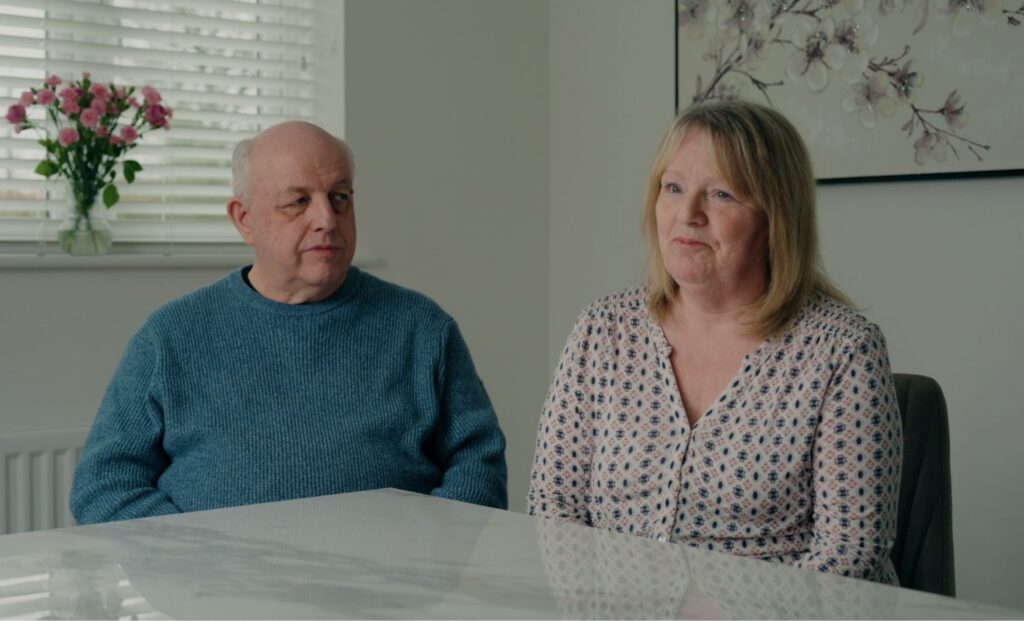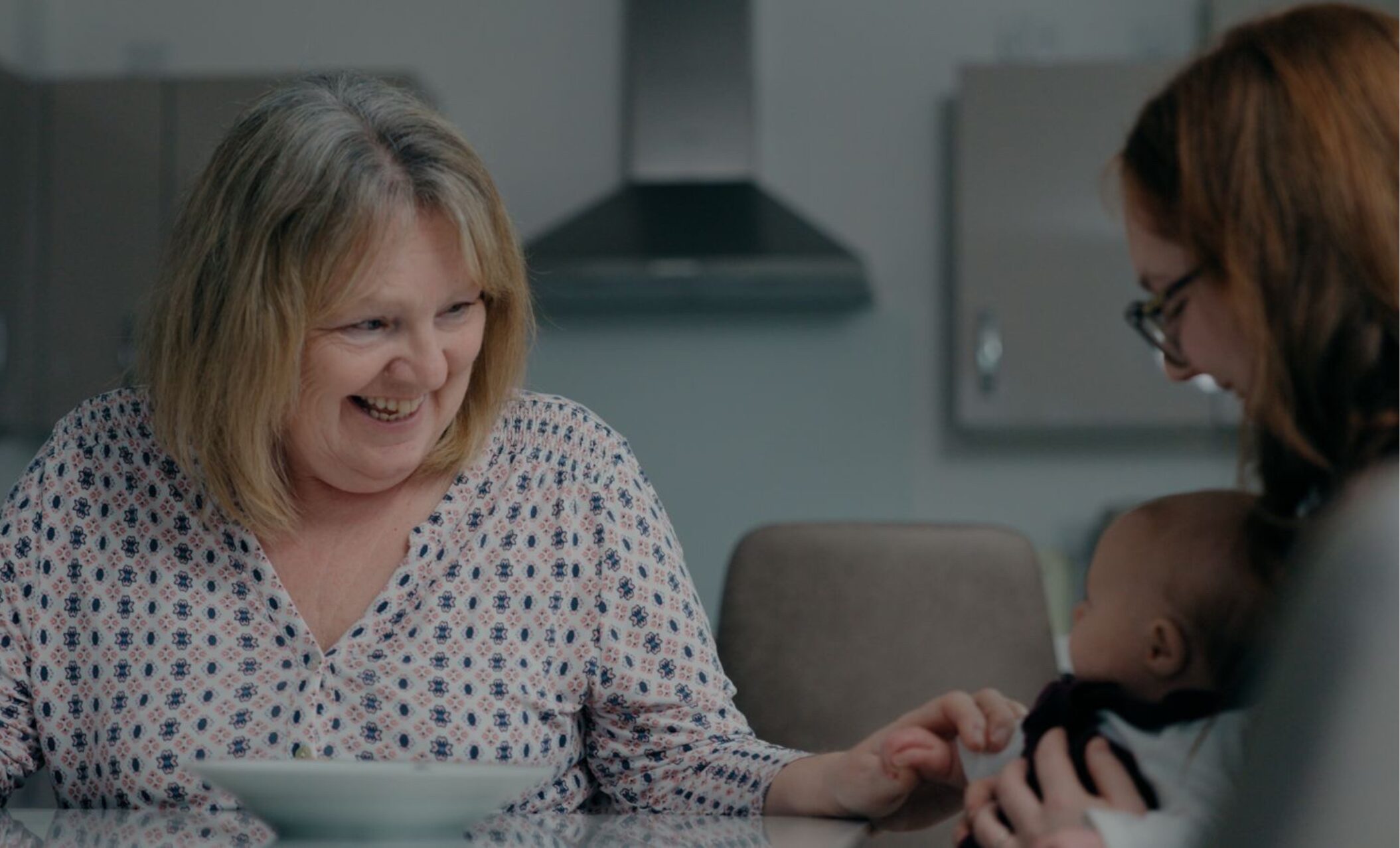
At the age of 59, Linda Richardson was enjoying her career as a palliative care nurse, looking after people at the end of their lives, a role she had held for nearly 30 years. She was spending precious time being a grandmother to her beautiful grandson and living an active lifestyle, walking and socialising with friends.
But then she started to experience double vision. Trips to the opticians resulted in changing her glasses prescriptions, but things didn’t improve. In 2022, following a hip replacement, an operation which went smoothly, Linda had a couple of falls, and she noticed her spatial awareness was off.
Things quietly got worse. Linda noticed she couldn’t read letters clearly, her writing became merged and the double vision was getting worse. When she parked her car at an odd angle in a car park, she knew something was seriously wrong.
“It was so strange,” Linda explains. “Different things started to happen and in isolation, you could put it down to other things, but together, they added up to so much more. And then I started to forget things. I wouldn’t be able to find the words I wanted to say, and I was getting lost in familiar places. I was really concerned that something was wrong.”
Linda was referred to a neurologist and at first, her symptoms were put down to getting older. However, a SPECT scan revealed she had posterior cortical atrophy (PCA), an uncommon type of dementia, and Alzheimer’s. It’s caused by damage that builds up in the cells at the back of the brain, the area that processes what we see and helps us make sense of the world around us. For Linda, the world had slowly been slipping out of focus.
“Even though it felt like jigsaw pieces were now being put in the right place, it was still a shock. I gave up my job, I don’t drive anymore – I’m slowly losing my independence. It’s like I’m a child again. I’ve stopped driving at night as I no longer feel safe. It’s been very stressful on everyone, especially my husband. He’s in the process of taking early retirement, and we’ve decided to move into a property on one level, to reduce the risk of falls as my vision worsens. We’ve just welcomed a new baby granddaughter, which is wonderful, but I am limited to holding whilst seated because I’ve become unsteady. While I get lovely cuddles on the sofa, I want to do so much more and be more involved.”
Every three seconds, someone in the world develops dementia. There is no cure, and treatments are limited. People with dementia may only begin to show signs of the disease 20 years after the changes in the brain start to occur, by which point treatment is far less successful. Early diagnosis is therefore imperative to allow us to give future patients a better chance against the disease.
Researchers at University Hospital Southampton NHS Trust, alongside teams at the University of Southampton, are attempting to change this through the READ-OUT study, which aims to identify blood tests to diagnose dementia more accurately and quickly than current methods.
Currently, most people are diagnosed using memory tests and brain scans. These are less accurate than ‘gold standard’ tests like PET scans or lumbar punctures, which can help to confirm what type of dementia they have. However, only 2% of people can access these specialist tests due to lack of availability.
Blood tests could provide a much easier way to diagnose people quickly and accurately at an earlier stage. This will help people access care and support, but also means the NHS is ready if new treatments are approved.
The READ-OUT study aims to identify the best set of biomarkers for diagnosing Alzheimer’s disease and other types of dementia, including vascular dementia, frontotemporal dementia, and dementia with Lewy bodies. Participants give a blood sample which the team uses to select the most effective panel of biomarkers. It is led by Professor Vanessa Raymont at the University of Oxford and Southampton is a recruiting site, led by Professor Chris Kipps, Consultant Neurologist and Clinical Director for Research and Development at UHS and Professor of Clinical Neurology and Dementia at the University of Southampton.
Prof Kipps says: “Since dementia gets worse over time, we need to be able to give these treatments at the earliest possible stage, when they are likely to be most effective.
“We can best do this if we know people are at an early stage of dementia. Blood tests could make this possible at the scale required and allow more people to get the care and support they need.
When Linda heard about the research, she didn’t hesitate to take part. It gave her some comfort to know that her actions could help someone else in her position in the future. She completed a questionnaire and gave her blood samples to be analysed. She will do the same in a year.
“It’s been difficult to come to terms with the fact that there is no treatment for me. I felt lost when I was given the diagnosis, as though I am on a long, lonely road. But while I know nothing can be done for me, I might be able to help people in the future.
“If there’s a chance this study can find a way of telling people earlier that they have dementia, we can give them more time with their families. Dementia is the forgotten disease. Other diseases get so much more attention – and funding – and dementia is left behind. The more I can do to change things, the better.”
Jay Amin, Associate Professor in Psychiatry of Older Age at the University of Southampton and the Memory Assessment and Research Centre at Hampshire and Isle of Wight Trust, is also involved in the study. He adds: “In recent years, a number of different blood tests that can diagnose Alzheimer’s disease and other causes of dementia have shown very promising results in research settings.
“But we know that dementia often involves multiple conditions, so a panel of biomarkers is needed to give the us the best possible chance of diagnosing it earlier.
“We are currently still recruiting and then in the final two years of the study, we hope to run a clinical trial to explore how having a blood test for dementia affects diagnosis and quality of life.”